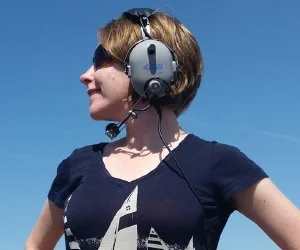

NWDC is pleased to share the art and ideas of Suze Woolf.
Suze has been drawing all her life. After an initial undergraduate degree, she pursued fifth-year studies in printmaking and ceramics at the University of Washington. Her professional career has included the graphic design of printed materials and interface designs for commercial and prototype software applications. In the last few years, she has devoted herself to the watercolor medium. From traditional landscape sketches—she calls them her love letters to the planet — large-scale industrial subjects and the numbering systems on utility poles, she loves to bring attention to what people don’t usually notice. She finds intense visual experiences to capture everywhere she looks.
Much of my subject matter shares a theme of human impact on the environment. I am equally fascinated by subjects not usually considered "art-worthy", such as light switches or the numbers on telephone poles. Whether it is my anxiety about climate change expressed in paintings of burned-over forests, or the eerily beautiful and faintly disturbing paintings of night-time industrial settings, I know that my best work contains both awe and ambivalence. — Suze Woolf
How were you introduced to art?
Grew up drawing on the dining room table! Took Hazel Koenig's UW art classes for kids :- ) Got distracted by words in high school and college but was an early adopter of computer graphics.
Where do you find inspiration when creating new work?
Predominantly in the natural world. I'm a lifelong outdoor person and I've seen a lot of changes in it, making me curious. But there are other sources as well -- iteration and collaboration for example. I get new ideas from the last project and from other people.
“Snake Goddess” Painting: varnished watercolor on torn paper mounted on shaped board, 52”H x 9”W x 2”D (2025). The shape of this burned snag on Washington’s Yellow Hill reminded me of ancient Minoan snake goddess figures.
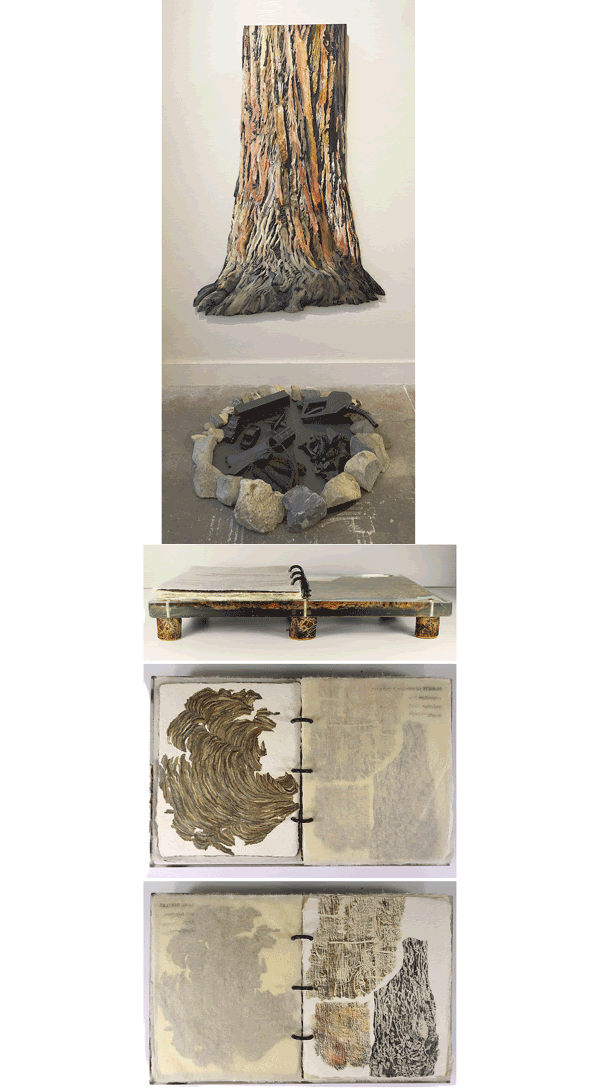
“Bark Beetle Book Vol. XLII: Chewing Wood” Artist book: Spruce bark in epoxy, handmade paper with embedded bald-faced hornet paper and bark beetle gallery rubbings, gompi paper overlays with hand-lettered pencil text, anodized U-bolts. 18"W x 12"H x 5"D (2025). Deborah Greenwood made the paper, Troy Gua cast the bark, Dr. Barrett Klein gave advice and review, Dr. Kevin Loope also reviewed and provided additional materials. Link to video with text read aloud to each page.
What do you consider your greatest artistic achievement?
The next thing is always going to be the greatest or why would I keep working! But I am proud of a number of projects—now 61 close-up watercolor portraits of burned trees and 44 artist books made from bark-beetle-affected wood and bark.
What is the quality you most like in an artist?
Creativity—innovative ideas that emerge out of non-obvious antecedents
Which living artist do you most admire?
I can't answer that!! Art is not a single-axis linear scale -- different media: book artists, painters, sculptors, weavers, etc., different criteria: best craftsmanship, craziest ideas, most colorful, deepest meaning, funniest, most value-driven...
If you could change one thing about yourself, what would it be?
I would learn how to say no!
What is your most treasured possession?
Again, a hard question, which varies by category. In some ways, there is no single object but rather gratitude for the curiosity, education and values I inherited from my family.
Who has had a significant influence over your work?
My father, Harry Woolf, who framed zoo sketches I did as a 9-year-old; Robert Sperry, Bill Ritchie, Ramona Solberg, Carl Youngman & Ellie Mathews, Cathe Gill.
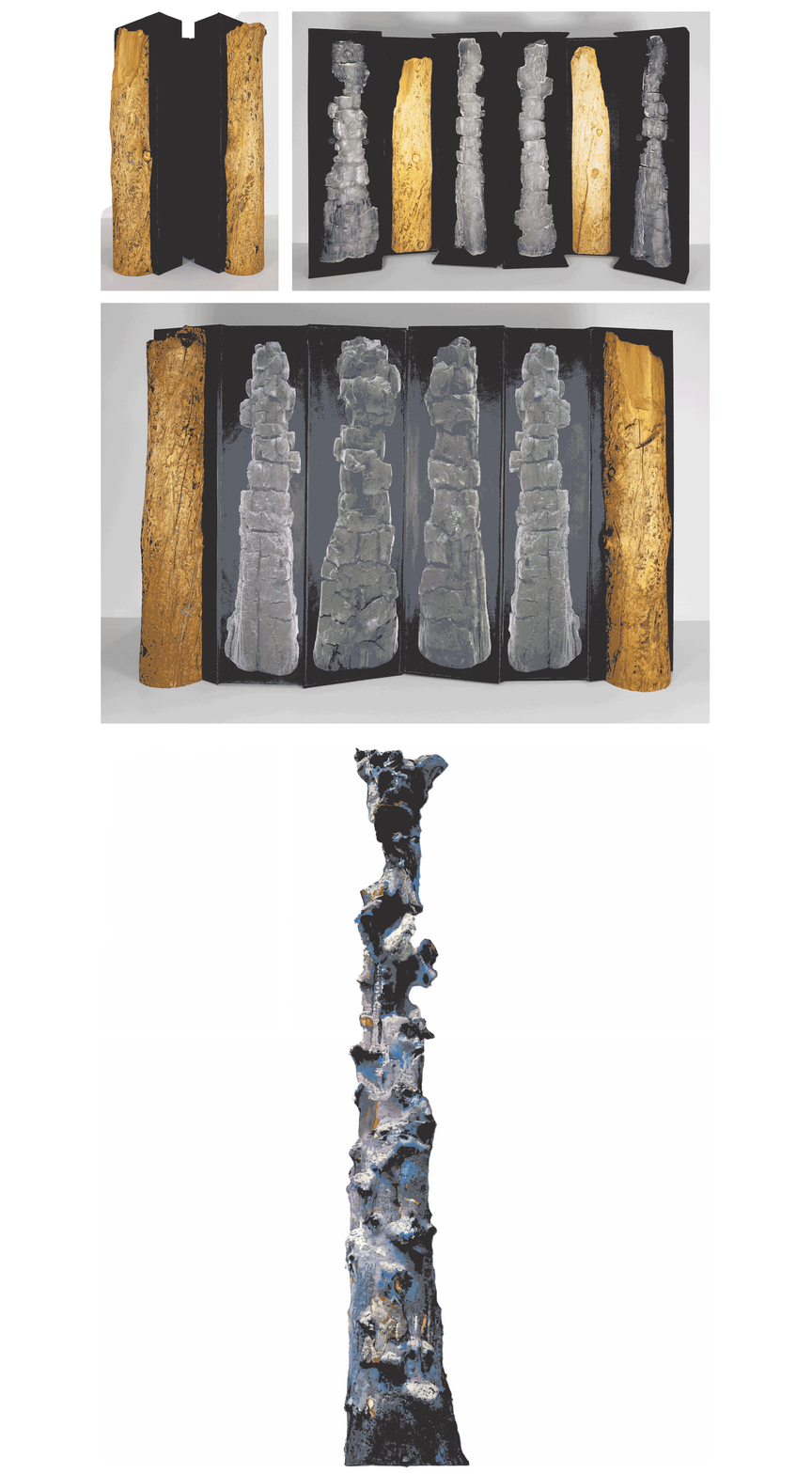
“Bark Beetle Book Vol. XLIII: Multifactorial” Artist book: Epoxy casts of burned branch, actual branch with mountain pine beetle galleries, photographs of casts printed on fabric, book board, and book cloth. Structure is accordion-folded, hinged boxes. 4.25"W x 14"H x 2.25"D (2025). Forests face many threats these days, two of the most obvious being wildfires and bark beetles. Both are exacerbated by heat and drought brought on by a warming climate.
“Fire-Adapted Low Severity” Painting: varnished watercolor on torn paper mounted on shaped board, 52”H x 35”W x 2”D (2024). This redwood, in the Lady Bird Grove of Northern California's series of state and national redwood parks, had been burned at its foot and had a number of small singed areas. But with its thick bark, it survived the threat and continued to grow to its enormous height and circumference. Like other fire-adapted species, it could tolerate low-severity burns.
“Fire Pit” installation below the painting: rocks, black paper circle, scorched corn cobs, barbed wire, cow bone, coal, ceramic insulator, gas pump handle, models of jet, semi truck, SUV, oil barrel. 36” diameter x 6”H (2022 but can be shown with any of the burned tree portraits). Objects symbolize the three largest carbon-emitting sectors of US economy: energy production, transportation, and agriculture.
How has your studio practice changed?
If I know how to do something, I'm soon bored. I am constantly trying to learn and add things I haven't tried before—so there's often a lot of cursing when it doesn't work at first. But I'm happy to look back and see how all the different skills I've learned combine into new works.
What is your idea of perfect happiness?
Again, no single answer--top candidates: Natural beauty, recognition of work accomplished, good health, the company of friends and family... and of course, dark chocolate!